Top 10 Features a Good School ERP Software Must Have
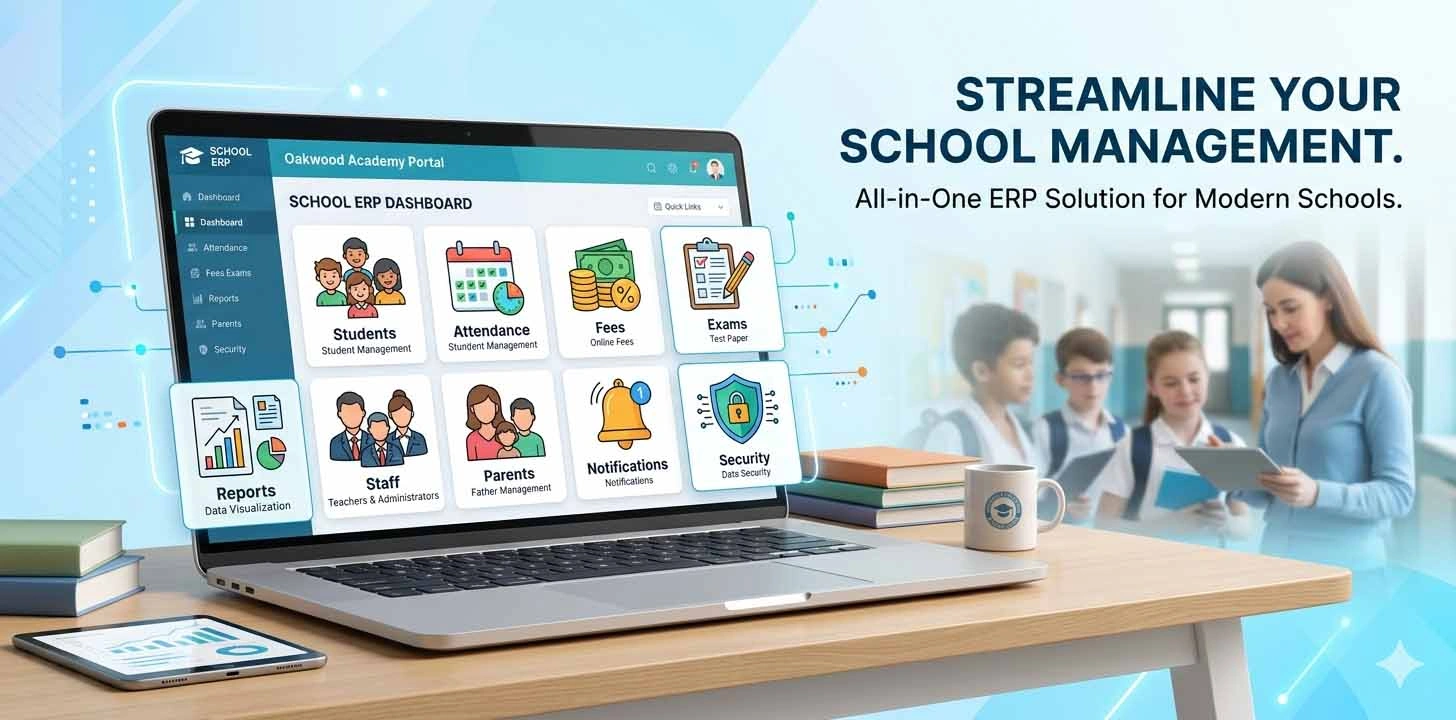
Leave a commentA good School ERP software should help schools manage students, attendance, fees, exams, reports, staff, communication, and administration from one organized platform. Here are the top 10 important features every modern School ERP system should have.
Choosing the right School ERP software is an important decision for any school, institute, academy, or education platform. A good ERP system does not only store data. It should simplify daily work, reduce manual effort, improve communication, and help management make better decisions.
Every school has different requirements, but some features are essential for almost every educational institution. Without these core features, a School ERP system may look attractive but fail to solve real administrative problems.
Here are the top 10 features a good School ERP software must have.
- Student Information Management
Student data is the foundation of any School ERP system. A good ERP should allow schools to manage complete student profiles, including admission details, class, section, roll number, guardian information, contact details, address, documents, academic history, and status.
This helps the administration find student information quickly and maintain accurate records.
- Attendance Management
Attendance is a daily activity in every school. A modern ERP should provide a simple and efficient way to mark attendance for students and staff.
The system should also generate attendance reports, monthly summaries, absent lists, and attendance percentage reports. This helps teachers, coordinators, and management monitor regularity and identify attendance problems early.
- Fee Management
Fee management is one of the most important parts of school administration. A good School ERP should handle fee structures, fee collection, concessions, discounts, due reports, receipts, payment history, and outstanding balances.
It should reduce manual calculation errors and help the accounts department track collections more efficiently.
- Examination and Result Management
Managing exams manually can be time-consuming. A School ERP should support exam setup, marks entry, grade calculation, result processing, report card generation, and performance analysis.
This feature helps teachers and administrators prepare accurate academic reports faster.
- Staff and HR Management
A school is not only about students. Teachers, administrative staff, support staff, and management team members also need proper records.
A good ERP should manage staff profiles, documents, attendance, leave records, roles, responsibilities, and department information. This helps schools maintain a professional HR system.
- Role-Based Access Control
Not every user should have access to every part of the system. A School ERP must provide role-based access control.
For example:
- Admin can manage the full system
- Teachers can manage attendance, marks, and class-related data
- Accounts staff can manage fees
- Students can view academic information
- Parents can view child-related information
This improves data security and keeps the system organized.
- Parent, Student, and Teacher Portal
A modern School ERP should provide separate portals or dashboards for different users. Students, parents, and teachers should be able to access relevant information easily.
A parent portal can show attendance, fees, notices, results, and communication updates. A teacher portal can help manage classwork, attendance, marks, and student information. A student portal can provide academic details and learning-related updates.
- Reports and Analytics
Reports are very important for school management. A good ERP should generate useful reports for attendance, fees, exams, students, staff, collections, dues, and academic performance.
Good reporting helps management understand the current condition of the school and make better decisions.
- Communication and Notification System
Communication between school, parents, teachers, and students should be smooth. A School ERP should support notices, messages, announcements, email, SMS, or push notification integration depending on project requirements.
Good communication reduces confusion and keeps everyone informed.
- Secure Document and Download Management
Schools often need to manage documents such as student files, ID cards, certificates, reports, study materials, and downloadable resources.
A good ERP should provide secure access to important documents and files. Access should be controlled based on user role, permission, or purchase/approval status where applicable.
Why These Features Matter
A School ERP system should not be just a collection of pages. It should solve real problems. The right features can save time, reduce errors, improve transparency, and make the entire institution more organized.
When these features are properly planned, the ERP becomes useful for administrators, teachers, students, parents, and management.
How CodideX Helps Developers
CodideX is a modern School ERP HTML template created to help developers build school management systems faster. It provides a clean and professional interface structure that can be customized for different school ERP projects.
Developers can use CodideX as a front-end foundation and connect it with their own backend technology such as PHP, Laravel, CodeIgniter, ASP.NET, Node.js, or any other platform.
With ready dashboard layouts, forms, tables, UI components, and ERP-style sections, CodideX helps developers save time and create a better user experience.
Conclusion
A good School ERP software must be practical, secure, organized, and easy to use. Features like student management, attendance, fees, exams, reports, staff management, portals, communication, and access control are essential for a complete school management system.
For developers and software teams planning to build a School ERP solution, starting with a professional template like CodideX can make the development process faster and more structured.